
This is an illustrative, composite scenario based on the kinds of challenges we repeatedly see with Ontario manufacturers — not a single named client. Company details are generalized and the improvement figures are typical ranges seen across manufacturing ERP implementations, not measured results from one specific business. The goal is to show, concretely, what implementing Odoo Manufacturing actually involves and where the value comes from.
The starting point: a manufacturer outgrowing its tools
Picture a mid-size Ontario manufacturer — say a 60-employee metal fabrication and contract manufacturing shop. The business is healthy and growing, but the systems holding it together are not keeping up:
Work orders are printed on paper or tracked in a whiteboard-and-spreadsheet combination. Bills of materials live in separate Excel files, and nobody is quite sure which version is current. Inventory counts never match what is physically on the shelf, so the team over-orders some materials and runs out of others. Sales takes orders without real visibility into shop-floor capacity, so promise dates are educated guesses. And because production data lives outside the accounting system, nobody can say with confidence what a given job actually cost to produce.
None of this is unusual. It is the normal state of a manufacturer that grew faster than its software. The problem is that every one of these gaps quietly costs money — in expedited freight, idle machine time, scrap, late deliveries, and margin that simply cannot be measured.
What an Odoo Manufacturing implementation actually covers
Odoo Manufacturing (the MRP application) connects the shop floor to inventory, purchasing, sales, and accounting in one system. Here is what a typical implementation puts in place.
Process discovery on the floor
Before any configuration, the implementation starts with mapping how the shop actually works — walking the floor, watching how a job moves from quote to shipment, and documenting every handoff and bottleneck. Odoo is then configured to match those real processes, rather than forcing the team to change how they work to suit the software.
Bills of materials and routings
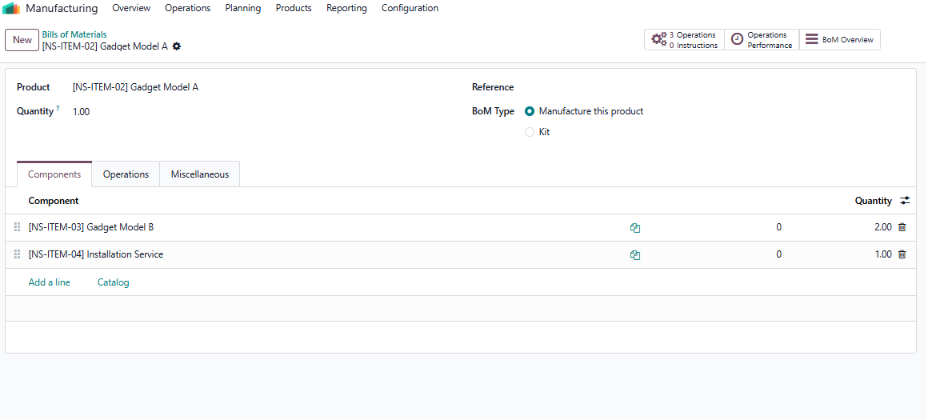
Multi-level BOMs are built in Odoo with version control, so there is one authoritative recipe for every product, including sub-assemblies and kits. Routings define the work centers and operations each product passes through, with expected times per step. This single change — moving BOMs out of scattered spreadsheets into a controlled system — is often where accuracy jumps the most.
Work orders and shop-floor control
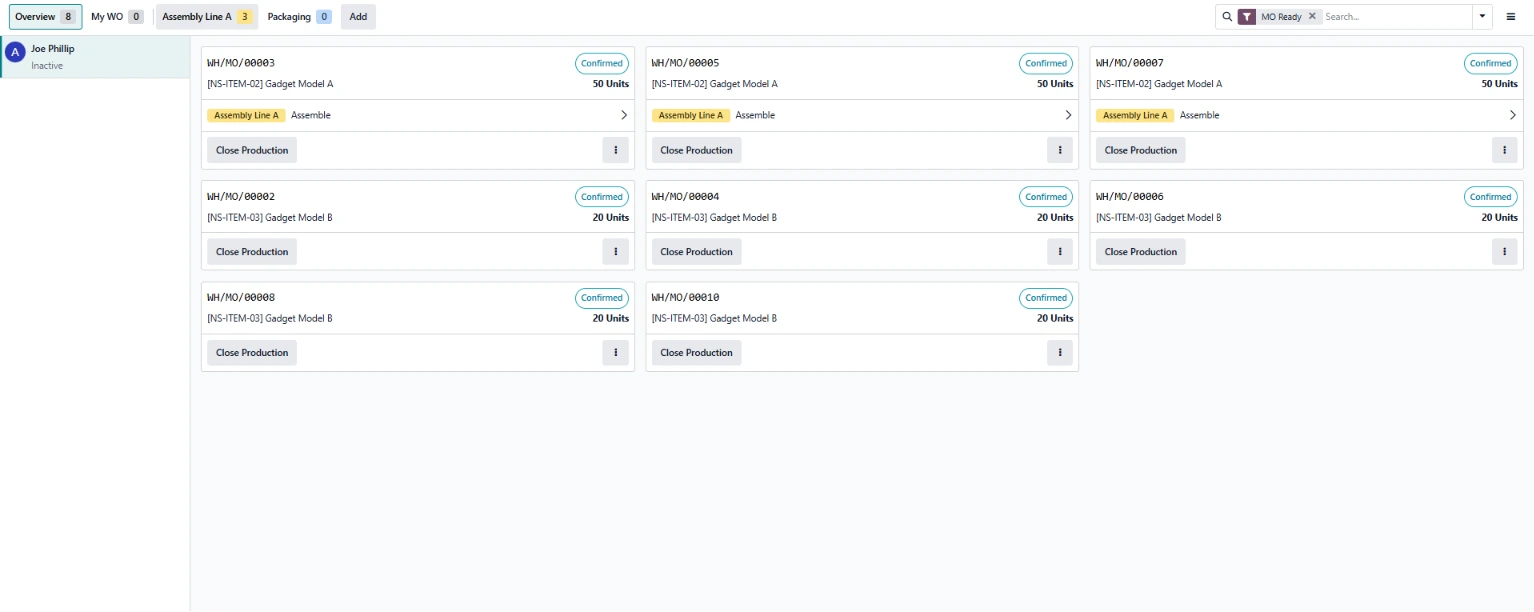
Manufacturing orders are generated from sales orders or stock rules, and operators work from a tablet-based shop-floor interface rather than paper. They clock in to operations, follow work instructions, report quantities produced, and flag quality issues in real time. Supervisors see live status across every job instead of walking the floor to ask.
Inventory and purchasing, connected
Stock levels update as materials are consumed in production. Reorder rules and min/max points drive purchasing automatically, so critical materials are replenished before they run out, without overstocking. Lot and serial tracking gives full traceability from supplier to finished product — important for audits and any recall scenario.
Quality control
In-process quality checks with pass/fail criteria are built into the production steps, with automatic alerts and non-conformance tracking, so quality is enforced at the point of work rather than caught after the fact.
Production costing
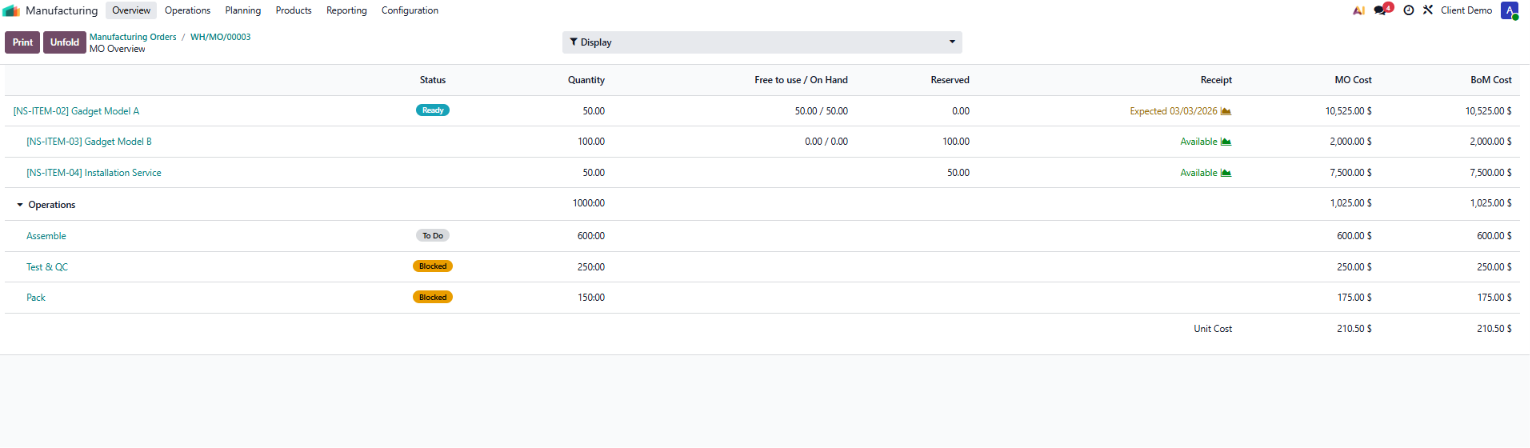
This is the payoff for management. Real material, labour, and overhead costs are captured against each manufacturing order, so the business finally knows its true cost — and true margin — on every product and job.
Project-based manufacturing: make-to-order and refurbishment
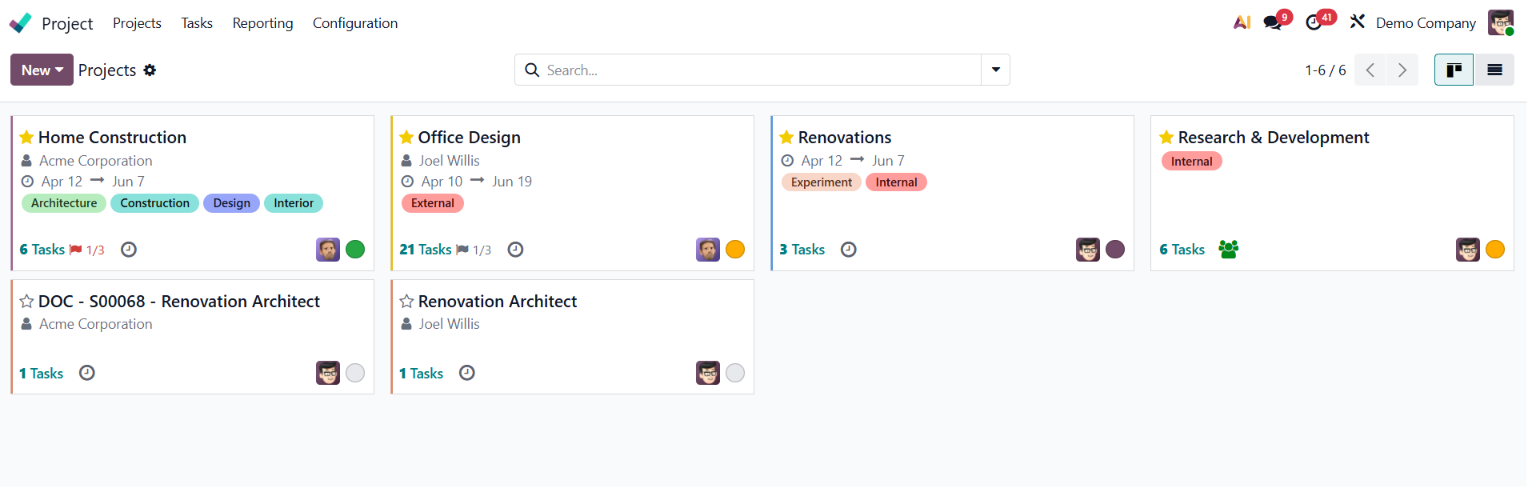
Not every manufacturer runs repetitive production. Many Ontario shops are project-based — every order is effectively its own project, with its own materials, labour, milestones, and budget. Odoo handles this well by combining Manufacturing with the Project and Analytic Accounting tools.
Make-to-order (MTO) and engineer-to-order
For custom or configured products, Odoo can trigger production (and even purchasing of long-lead materials) directly from a confirmed sales order, so nothing is built to stock speculatively. Each custom build can carry its own BOM, and costs roll up to that specific order. For engineer-to-order work, the Project app tracks design and engineering tasks alongside the manufacturing order, so the full job — engineering plus build — lives in one place with one budget.
Refurbishment, remanufacturing, and repair projects
Refurbishment is a particularly good fit for Odoo's project-based approach, and it is where a lot of manufacturers struggle with generic systems. A refurbishment job is unpredictable by nature: you receive a used unit, assess it, and only then know what parts and labour it needs. In Odoo this can be handled as a project or a manufacturing order tied to an analytic account, where you can:
- Receive and track the incoming core or unit by serial number, preserving its history.
- Log the teardown and inspection as project tasks, then add the parts and operations the unit actually requires — rather than a fixed BOM.
- Capture every part consumed and every labour hour against that specific unit, so you know the true cost to refurbish each one.
- Compare refurbishment cost against replacement or resale value to decide, per unit, whether a job is worth doing.
- Keep full traceability and warranty history by serial number for the refurbished unit going back out the door.
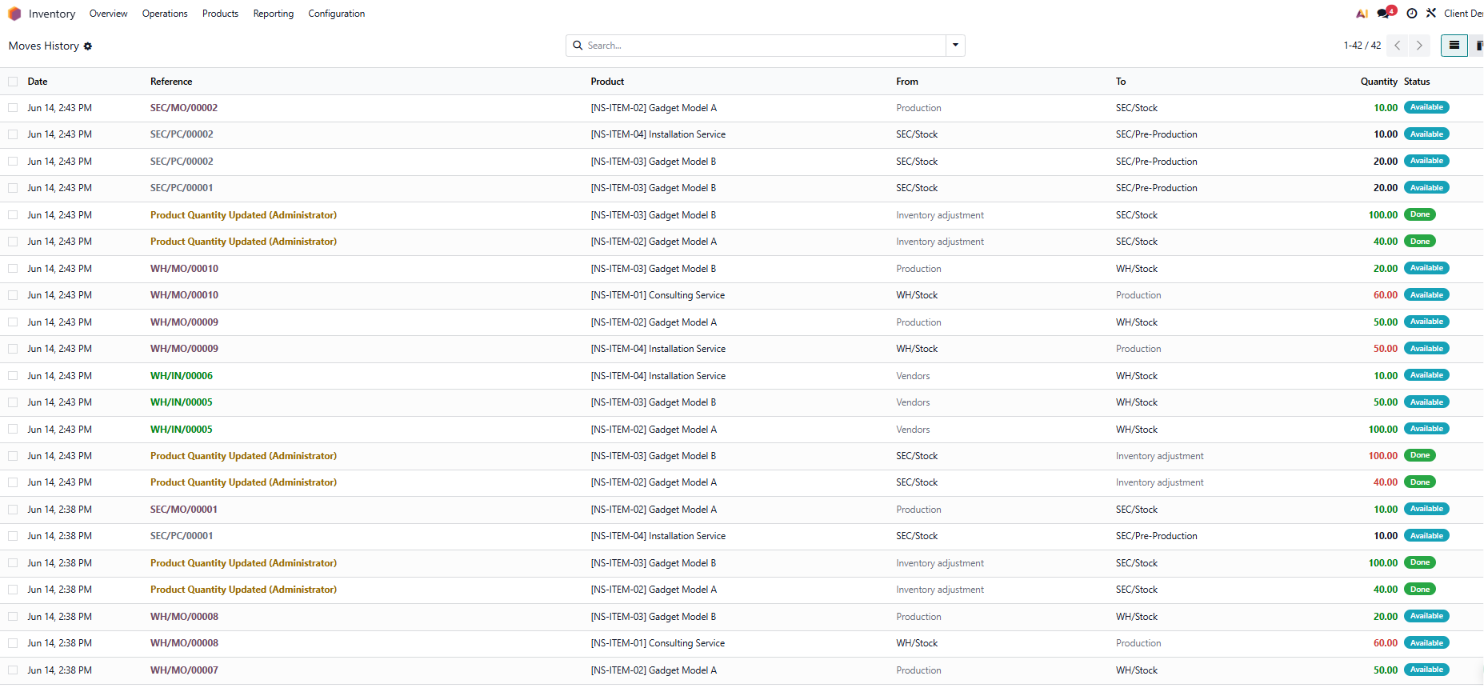
The same pattern applies to remanufacturing and field-repair operations: variable scope, per-unit costing, and serial-level traceability — all tracked in one system instead of a spreadsheet per job.
Per-project profitability
Because labour, materials, and overhead all post to the project or analytic account, project-based manufacturers get something they rarely have with disconnected tools: accurate, per-project profitability. You can see which kinds of jobs, customers, or product lines actually make money — and which quietly lose it.
How the implementation is delivered
A structured rollout matters as much as the software. A typical engagement runs in phases: discovery and process mapping, solution design and sign-off, configuration and customization, validated data migration (products, BOMs, inventory, customers, open orders), hands-on training for every role from operators to management, and a supported go-live with optimization afterward. Weekly demos through the build keep the team involved, so the system is familiar — not a surprise — on day one.
Typical results
Across manufacturing implementations, the kinds of improvements businesses commonly see (stated as typical ranges, not a guarantee for any specific business) include materially faster production throughput, a large reduction in picking and shipping errors once the warehouse is barcode-driven, meaningful inventory cost savings from automated replenishment, and far better on-time delivery once promise dates are based on real capacity. Just as important, and harder to put a single number on, is the shift from guessing to knowing: real-time visibility and accurate job costing change how the business is run.
Who this applies to
This kind of implementation fits Ontario and Canadian manufacturers who are:
- Running production on spreadsheets, paper, or disconnected tools and feeling the strain of growth.
- Doing repetitive, make-to-order, engineer-to-order, or refurbishment and remanufacturing work — or a mix.
- Struggling to know their true cost and margin per product or per job.
- Wanting one connected system across production, inventory, purchasing, sales, accounting, and Canadian payroll, instead of a scattered toolset.
Frequently asked questions
Is Odoo good for manufacturing? Yes. Odoo's Manufacturing (MRP) application supports multi-level BOMs, routings, work-order and shop-floor control, quality checks, maintenance, and real-time production costing, and it connects directly to inventory, purchasing, sales, and accounting in one system. It suits discrete, process, make-to-order, engineer-to-order, and refurbishment manufacturing.
Can Odoo handle make-to-order and custom manufacturing? Yes. Odoo can trigger manufacturing and long-lead purchasing directly from a confirmed sales order, so custom products are built to order rather than to stock. Each build can carry its own BOM, and costs roll up to that specific order, with engineering tasks tracked alongside in the Project app for engineer-to-order work.
Does Odoo work for refurbishment or remanufacturing? Yes. Refurbishment and remanufacturing are well suited to Odoo's project-based approach. Units can be received and tracked by serial number, teardown and inspection logged as tasks, and the actual parts and labour each unit requires captured against it — giving true per-unit refurbishment cost and full traceability, rather than forcing a fixed bill of materials onto a variable job.
How does Odoo track the real cost of a job? Odoo captures material, labour, and overhead against each manufacturing order or project using analytic accounting, so the true cost — and margin — of every product, build, or refurbishment job is visible, instead of being estimated after the fact.
How long does an Odoo manufacturing implementation take? It depends on scope, but a typical mid-size manufacturing implementation runs in a matter of weeks to a few months, delivered in phases (discovery, design, build, data migration, training, go-live) so the business is never thrown into a system it has not been trained on.
Can Odoo manufacturing connect to Canadian payroll? Yes. With Maplehorn's Canadian payroll for Odoo, shop-floor hours flow into payroll, and labour cost flows back into manufacturing orders and projects — so production costing reflects real, fully-burdened labour for Canadian operations across all provinces including Quebec.
Read our blog on Canadian Payroll: Canadian Payroll in Odoo
Bring your whole operation into one system
If your production runs on spreadsheets, paper, or disconnected tools — whether you do repetitive, make-to-order, or refurbishment work — Maplehorn can help you bring it all into Odoo: connected, costed, and built around how your shop actually works.
Book a free strategy call: Book with us Or call directly: +1 647-323-9824